
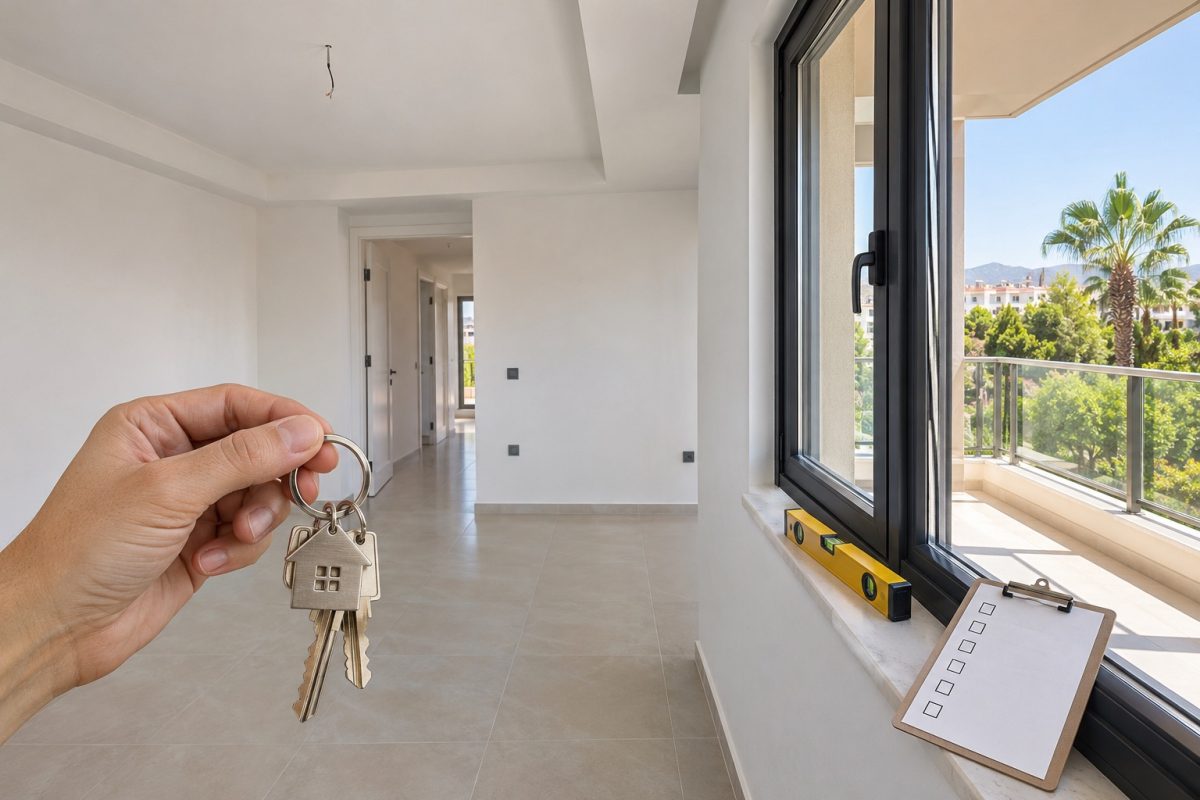
Taking over a new apartment is an exciting day — and it is also the day when defects are easiest to get fixed. Once you have moved in and the furniture is in place, a problem is harder to spot and harder to put right.
Kendirciler İnşaat has handed over hundreds of apartments since 1985. The checklist below is based on the walk-through we do together with our buyers. Allow an hour or two and don’t rush. If you live abroad and cannot attend, ask someone you trust — or an independent engineer — to do it for you.
What to bring
- A printout of this list and a pen
- Your phone (for photos and video) and a torch
- A phone charger or small socket tester, to try the sockets
- A small spirit level and a tape measure
- If possible, a second person: four eyes see more than two
Write any defects into a handover report signed by both sides, with a date by which they will be fixed. If you don’t speak Turkish, ask for the report to be translated or written in both languages.
1. Documents
- Has the occupancy permit (iskan) been issued?
- Has the title deed been converted to kat mülkiyeti, or is it still kat irtifakı?
- Are the documents ready for the electricity, water and gas connections?
- Is there a DASK policy (compulsory earthquake insurance)?
- Are you given the warranty cards and manuals for the boiler, air conditioners and built-in appliances?
- Have you received the management plan and details of the monthly maintenance fee (aidat) and building management?
2. Doors and windows
- Does the steel front door open and close easily, and does the lock work smoothly? How many keys are you given?
- Do interior doors close without rubbing, and are the handles firm?
- Do windows and balcony doors close fully, and are the seals in place?
- Any scratches, cracks or condensation on the glass? Moisture between the panes of double glazing means the unit is faulty.
- Do shutters and insect screens work, if fitted?
3. Walls, ceilings and floors
- Any cracks, bubbles, paint runs or stains on walls and ceilings? Shine a torch along the wall at a low angle — unevenness shows up clearly.
- Any signs of damp in corners, under windows or on the bathroom ceiling?
- Any broken, cracked or loose tiles or parquet? Tap tiles gently with a coin: a hollow sound means there is no mortar underneath.
- Are skirting boards and grout finished everywhere?
4. Plumbing and bathrooms
- Turn on every tap: is there hot and cold water, and is the pressure good?
- Do the basin, shower and bath drain quickly? Any smell from the drains?
- Does the toilet flush properly, and does it keep running afterwards?
- Check under basins and the kitchen sink with a torch: any drips at the joints?
- Does the shower floor slope towards the drain? Pour some water and watch.
- Does the bathroom and toilet ventilation work?
5. Electrics
- Is every circuit labelled in the fuse box, and is there a residual current device (RCD) whose test button works?
- Try every socket and every switch.
- Are there separate circuits in the kitchen for the oven, hob and dishwasher?
- Do the video intercom, internet and TV sockets work?
6. Heating, cooling and kitchen
- Does the boiler run and do the radiators get warm? With underfloor heating, does every room heat up?
- Do the air conditioners both cool and heat, and does condensation water from the outdoor units drain to the right place?
- Are the kitchen cabinets level, and do doors and drawers open easily? Any scratches or cracks in the worktop?
- Do the built-in appliances work, and does the extractor hood vent outside?
7. Balcony and terrace
- Does the balcony floor drain towards the outlet, or does water collect in the corners?
- Are the railings firm and high enough? Are the gaps narrow enough for small children?
- Is there a socket, a light and somewhere to dry laundry?
8. Shared areas
- Does the lift work, and does it have a valid inspection label?
- Do the lights work on the stairs, at the entrance and in the car park?
- Are your parking space and storage room allocated?
- If there is a pool, garden or playground, is it finished and ready to use?
- Are the fire escape, fire hose cabinets and exit signs in place?
- Any traces of leaks on the roof or in the basement?
After handover: your rights
Some defects only show up after you move in. A consumer who buys a home from a developer can claim for hidden defects for 5 years from handover under Turkey’s Consumer Protection Law (No. 6502). For defects in the load-bearing structure, the building inspection company is liable for 15 years from the occupancy permit.
When you notice a defect, photograph it, note the date and report it to the developer in writing. We consider being reachable after handover part of our job — and a good developer will want to hear about it.
Still choosing an apartment? Read our guide on new build or resale in Turkey.
Frequently asked questions
Is a handover report required by law in Turkey?
There is no required form, but a written handover report protects both you and the developer. It records the defects, what will be fixed and by when — and serves as evidence if there is a dispute later.
Can I refuse to take over an apartment with defects?
Minor defects are usually written into the report, and the apartment is taken over and fixed within an agreed time. If a serious defect makes the apartment unusable, you may consider postponing the handover and reviewing your contract with a lawyer.
I live abroad. Can someone do the handover for me?
Yes. A relative, a friend or an independent engineer can do it for you. To sign documents on your behalf, they will need a power of attorney drawn up by a Turkish notary or by a notary in your country with an apostille.
How long do I have to claim for defects found after handover?
A consumer who buys from a developer can claim for hidden defects for 5 years from handover. Report the defect in writing as soon as you notice it.
Questions about a handover?
We have completed around 30 projects in Konyaalti since 1999. Ask us anything about handovers or our projects in English on WhatsApp or Telegram.
